What BBL (gluteal fat transfer) is and what it corrects
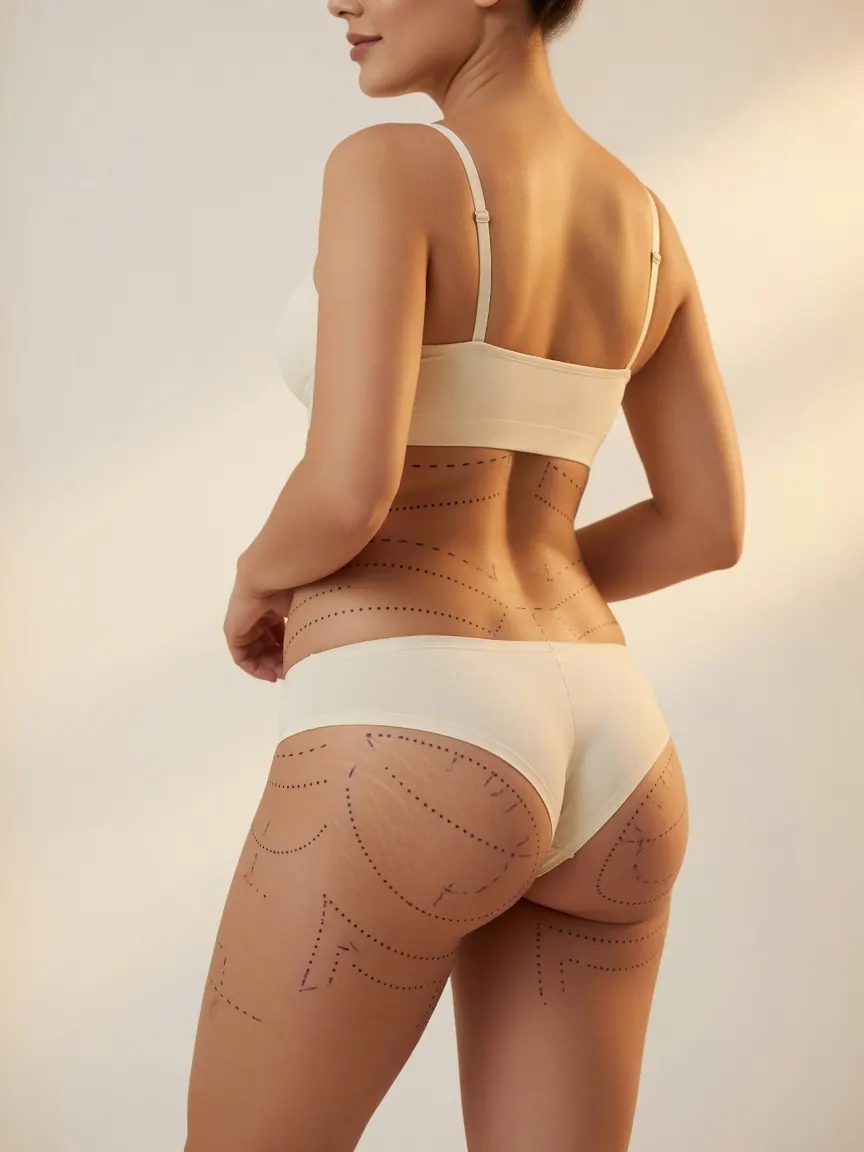
BBL combines two steps in a single surgery: first, fat is removed by liposuction from areas where you have excess, and then that fat is processed and injected into different layers of the buttocks to give them volume and shape.
This procedure aims to:
- Increase buttock volume using your own fat.
- Define the waist by reducing fatty tissue in the waist, abdomen or back.
- Improve the proportion between hips, waist and buttocks.
- Achieve a contour with a natural look and feel.
It is worth knowing that it does not correct significant skin laxity or replace an abdominoplasty when there is excess skin. Nor does it allow unlimited increases: the final volume depends on how much fat you have available and how much of it manages to last. If you are interested in other ways of approaching this area, you can read about buttock augmentation and decide at the consultation which option best fits your case.
Who it is indicated for and who it is not
Gluteal fat transfer is usually considered for adults in good health who have enough fat in other areas and want more gluteal volume with a harmonious result.
It may be a good option if:
- You have localized fat in the waist, abdomen or back that can be used.
- You prefer your own tissue instead of implants.
- Your skin has reasonable elasticity.
- Your expectations are realistic and you have discussed them with your doctor.
It may not be recommended, or may require a different strategy, if:
- You are very thin and there is not enough fat to transfer.
- You have uncontrolled illnesses, clotting problems or other conditions that increase surgical risk.
- You are pregnant or breastfeeding.
- You smoke and cannot stop tobacco before and after surgery.
- You are looking for a very large change that your anatomy does not allow.
The decision is made only after examining you and reviewing your medical history.
What the surgery is like with Dr. Sandro Florez
Assessment
At the consultation your history is reviewed, your body is examined, and the donor areas and the volume that can be achieved with caution are defined. Risks and alternatives are also discussed.
Surgery
It is performed in an accredited surgical setting, under anesthesia. First the fat is removed through small incisions, then it is purified and prepared for use. It is then carefully injected into the buttocks in several layers, avoiding the deep areas of the muscle, to promote even distribution and reduce complications. The duration depends on how many areas are treated, but it is usually several hours.
Afterward
When it is finished, compression garments are placed and you are given clear instructions for care at home. Follow-up visits are scheduled to monitor your progress and answer questions. Follow-up is part of the procedure, not an add-on, and Dr. Sandro Florez raises it from the first consultation.
Tests, preparation and anesthesia
Before surgery, lab tests are requested and, depending on your age and history, other studies such as an electrocardiogram or a pre-anesthesia evaluation. The goal is to confirm that you can have surgery with a reasonable level of risk.
As preparation, you will generally be told to:
- Stop smoking and nicotine during the weeks before and after surgery.
- Report all the medications and supplements you take; some, such as anticoagulants or anti-inflammatories, must be adjusted.
- Keep a stable weight and stay well hydrated.
- Follow the fasting instructions before anesthesia.
- Arrange for someone to accompany you on the day of surgery and during the first days at home.
Anesthesia is usually general or, in some cases, regional with sedation, and it is administered by an anesthesiologist. The choice depends on your health and the extent of the procedure. All of this is explained at the consultation and confirmed in writing, so that you arrive at surgery informed and with your questions answered.
Recovery and postoperative care
Recovery varies from person to person, but in general you can expect swelling, bruising and tenderness in the treated areas during the first weeks. Some discomfort is managed with the medications prescribed to you.
Common aspects of the postoperative period:
- Avoid sitting with direct pressure on the buttocks for as long as you are told, since pressure can affect the newly transferred fat. Specific positions and cushions are usually used.
- Wear the compression garment consistently, following the instructions.
- Sleep face down or on your side, as recommended.
- Walk gently from early on to promote circulation.
- Postpone intense exercise and physical exertion for several weeks.
- Attend the scheduled follow-up visits.
Returning to work depends on your activity; for office work it is usually possible in one or two weeks, always with adjustments. Seek care immediately if you notice fever, increasing pain, discharge or marked redness.
Results: what to expect and when
The buttocks look fuller from the start, but that first image includes swelling. As the swelling subsides, the volume settles and the contour becomes more defined.
In general terms:
- During the first weeks there are constant changes due to swelling.
- Part of the transferred fat does not take and is reabsorbed; for that reason the final volume may be lower than the initial one.
- The most stable result is usually assessed after several months.
- The waist looks more defined once the swelling in the liposuction area goes down.
The fat that takes usually lasts over time, but results depend on your weight, your lifestyle, your age and postoperative care. If you gain or lose a lot of weight, the shape may change. No procedure gives an identical result in everyone, and an honest conversation about what is realistic for your body is part of the assessment.
Why have surgery with a surgeon in Bogotá
Gluteal fat transfer is a surgery that requires specific training, anatomical judgment and careful handling of the technique. Choosing a surgeon who performs the procedure and provides the follow-up makes a difference in safety.
When deciding where to have surgery in the city, it is worth verifying that:
- The person operating is a physician trained in plastic or aesthetic surgery, and you can confirm it.
- The surgery takes place in an accredited facility, with an anesthesiologist and support team.
- The risks are explained to you frankly, such as infection, asymmetries, partial fat loss or vascular complications.
- There are follow-up visits after surgery and a clear way to reach out with any question.
- You are not pressured into decisions and exact results are not promised.
You can learn more about the team and the way we work on our about page. A good decision is based on clear information, not on urgency or promotions.
How much does BBL (gluteal fat transfer) cost in Bogotá
The cost of gluteal fat transfer is not the same for everyone, which is why a single figure is not published. It is defined after examining you and agreeing on the surgical plan.
Factors that influence it include:
- The number of donor areas treated with liposuction.
- The volume of fat planned for transfer and the technical complexity.
- The type of anesthesia and the surgical time.
- The facility where it is performed and the services included, such as the anesthesiologist and operating room.
- Pre-operative tests, compression garments and follow-up visits.
- Whether it is combined with other procedures, such as abdominal etching.
When comparing quotes, check what each one includes and do not be guided only by the lowest price; in surgery, the cheap option can end up costing more if safety is sacrificed. To receive a clear, personalized quote, book your consultation and we will explain each component with no obligation.