What Lipoma Removal Is and What It Corrects
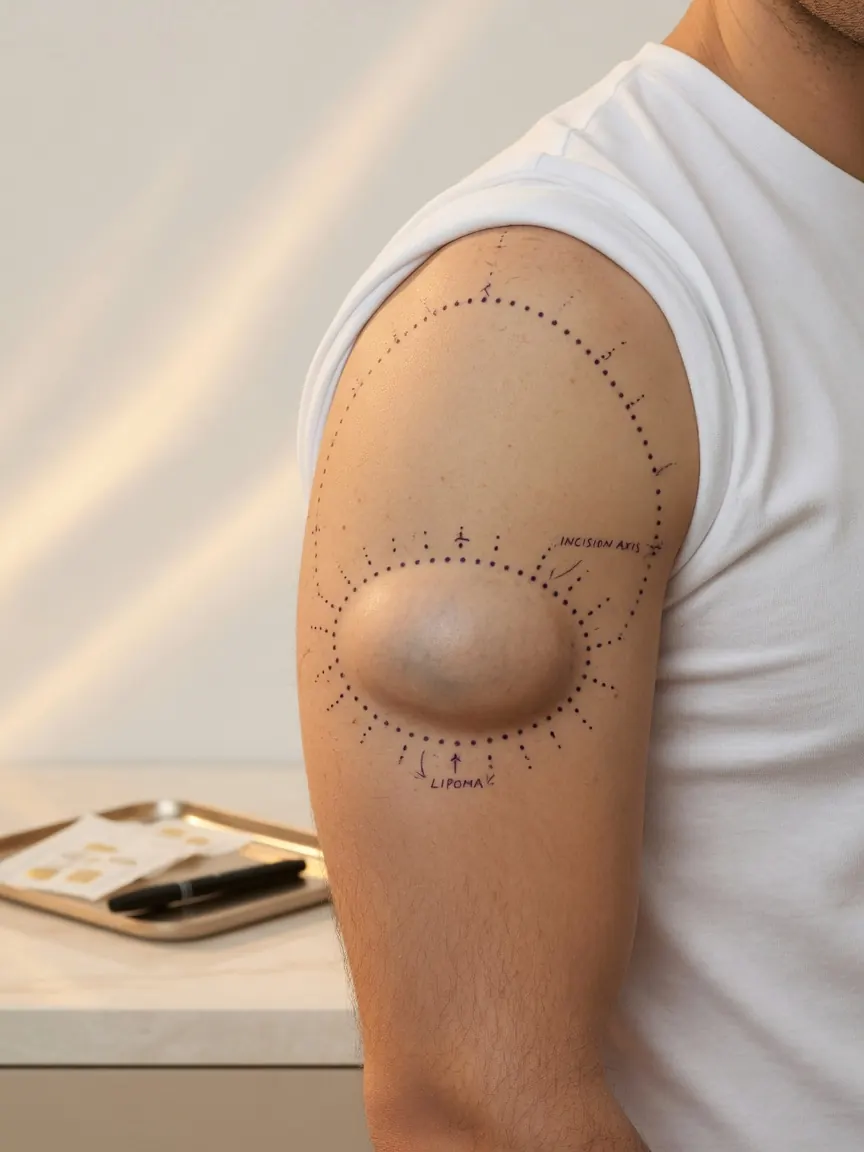
A lipoma is a benign tumor made up of fat cells that group together within a fibrous capsule under the skin. Lipoma removal consists of extracting that mass through a surgical incision, allowing both the fatty content and the surrounding capsule to be removed. This approach aims to reduce the likelihood of the lesion recurring in the same location.
The procedure mainly corrects:
- Visible or palpable lumps on the arms, back, trunk and other areas.
- Discomfort from pressure or rubbing against clothing.
- Aesthetic discomfort due to the volume or location of the lesion.
- Diagnostic uncertainty when the lesion changes in size or consistency.
Who It Is Indicated For and Who It Is Not
Lipoma removal is indicated for people with confirmed or highly suggestive lipoma lesions that cause symptoms, grow progressively, or affect appearance. It may also be considered when there are doubts about the diagnosis and histopathological study of the excised lesion is preferred.
- Indicated for: symptomatic lipomas, those with recent growth, those located in areas of friction, or those with aesthetic impact.
- Not immediately recommended for: lesions without prior medical evaluation, active infections in the area, uncontrolled coagulation disorders, or unrealistic expectations about the scar.
- In some cases, observation is preferred if the lipoma is small, stable, and asymptomatic.
How the Surgery Is Performed with Dr. Sandro Florez
The procedure is performed in the office under local anesthesia and usually lasts between thirty minutes and one hour depending on the size and location of the lipoma. Dr. Sandro Florez explains each step before starting and answers the patient's questions.
Evaluation
During the initial consultation, the lesion is examined, palpated to define its borders, and the medical history is reviewed. If there are doubts about the nature of the lump, a soft tissue ultrasound may be requested before scheduling the surgery.
Surgery
Local anesthesia is applied to the area. A small incision is then made, generally following the skin tension lines, the lipoma is dissected and removed completely, including its capsule. Finally, bleeding is controlled and the wound is closed in layers with fine sutures.
Afterward
A sterile dressing is applied and care instructions are given. The patient can go home the same day. A follow-up appointment is scheduled to check the wound and, if applicable, remove stitches.
Tests, Preparation and Anesthesia
As this is a minor outpatient surgery, preparation is usually simple. During the evaluation, it is determined whether additional tests are needed based on your age, medical history, and medications you take.
- In general, extensive laboratory tests are not required for small and superficial lipomas.
- If there are diagnostic doubts, a soft tissue ultrasound is requested.
- You should inform your doctor if you take anticoagulants, aspirin, or supplements that affect coagulation.
- On the day of the procedure, it is recommended to arrive with clean skin, without creams or makeup in the area.
- Anesthesia is local, applied directly to the area to be treated.
Recovery and Postoperative Period
Recovery from lipoma removal is usually quick. Most patients resume their daily activities within a few days, although it is recommended to avoid intense physical exertion for one to two weeks, especially if the lipoma was in a tension area such as the back.
- Keep the wound dry and covered according to instructions.
- Avoid pulling or manipulating the operated area.
- Do not engage in strenuous exercise until the doctor authorizes it.
- Attend the follow-up appointment to check progress and remove sutures if necessary.
- Report any signs of redness, warmth, discharge, or unusual pain.
Results: What to Expect and When
The immediate result is the disappearance of the lump. The skin in the area becomes flat, although there may be some swelling and a scar in the maturation process. The scar usually improves progressively during the first months and tends to become lighter and more discreet over time.
- The removed lipoma should not recur if it was completely excised, including the capsule.
- Initial swelling decreases within the first days or weeks.
- The scar may take several months to reach its final appearance.
- New lipomas may appear in other areas, as the tendency to form them may persist.
Why Have Surgery with a Medical Surgeon in Bogotá
Lipoma removal is a procedure that requires clinical judgment to differentiate a lipoma from other skin and soft tissue lesions. A medical surgeon in Bogotá can evaluate the lesion, determine if it is a candidate for surgery, and perform the extraction with proper technique to minimize scarring and reduce the risk of recurrence.
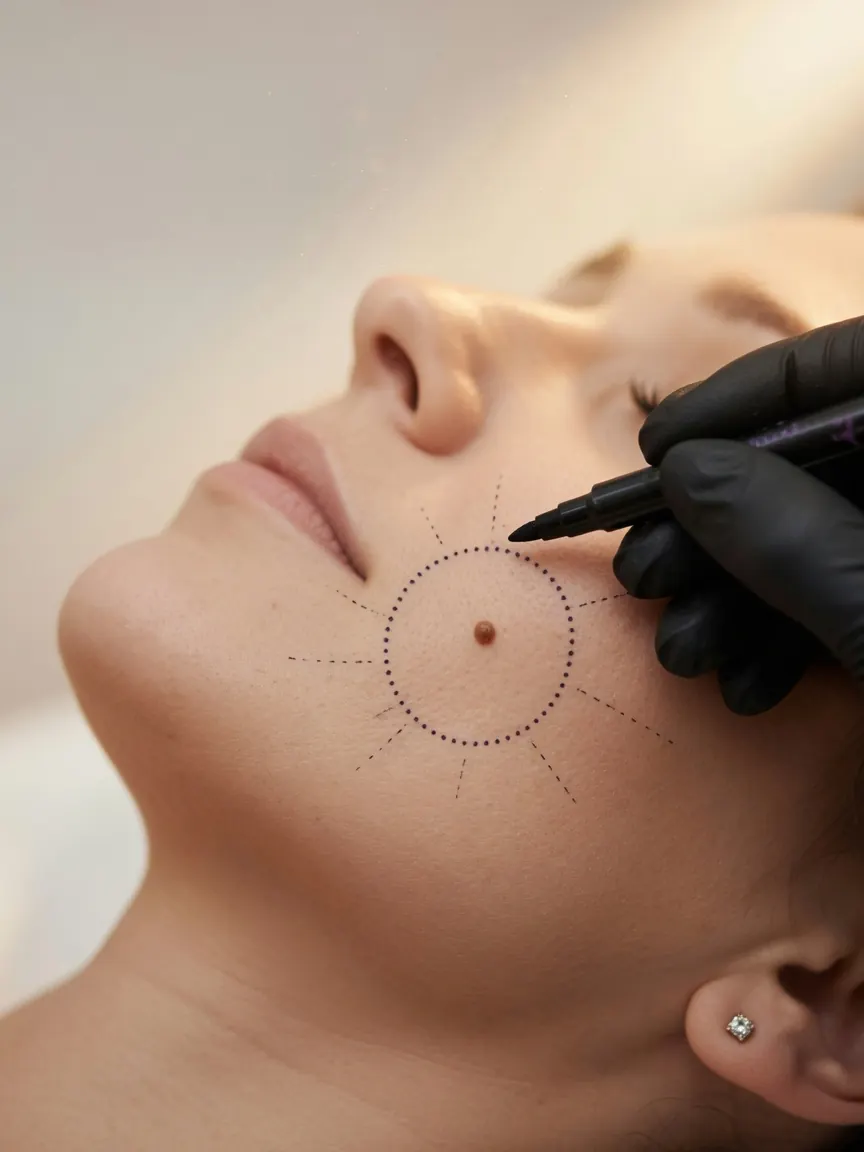
Dr. Sandro Florez performs this procedure at his office in Bogotá, with local anesthesia and postoperative follow-up. If you have other lesions such as moles or warts, you can also consult about mole and wart removal in Bogotá. And if your concern is localized fat in larger areas, there is the option of liposuction in Bogotá.
How Much Lipoma Removal Costs in Bogotá
The cost of lipoma removal in Bogotá depends on several factors: the size and number of lesions, the anatomical location, the complexity of the extraction, and whether a subsequent pathology study is required. Removing a small and superficial lipoma is not the same as removing a deep or multiple one.
During the evaluation with Dr. Sandro Florez, the surgical plan is defined and a clear estimate is provided based on your case. If you want to learn more about the office and its location in Bogotá, visit about us or schedule your appointment.