What mole and wart removal is and what it corrects
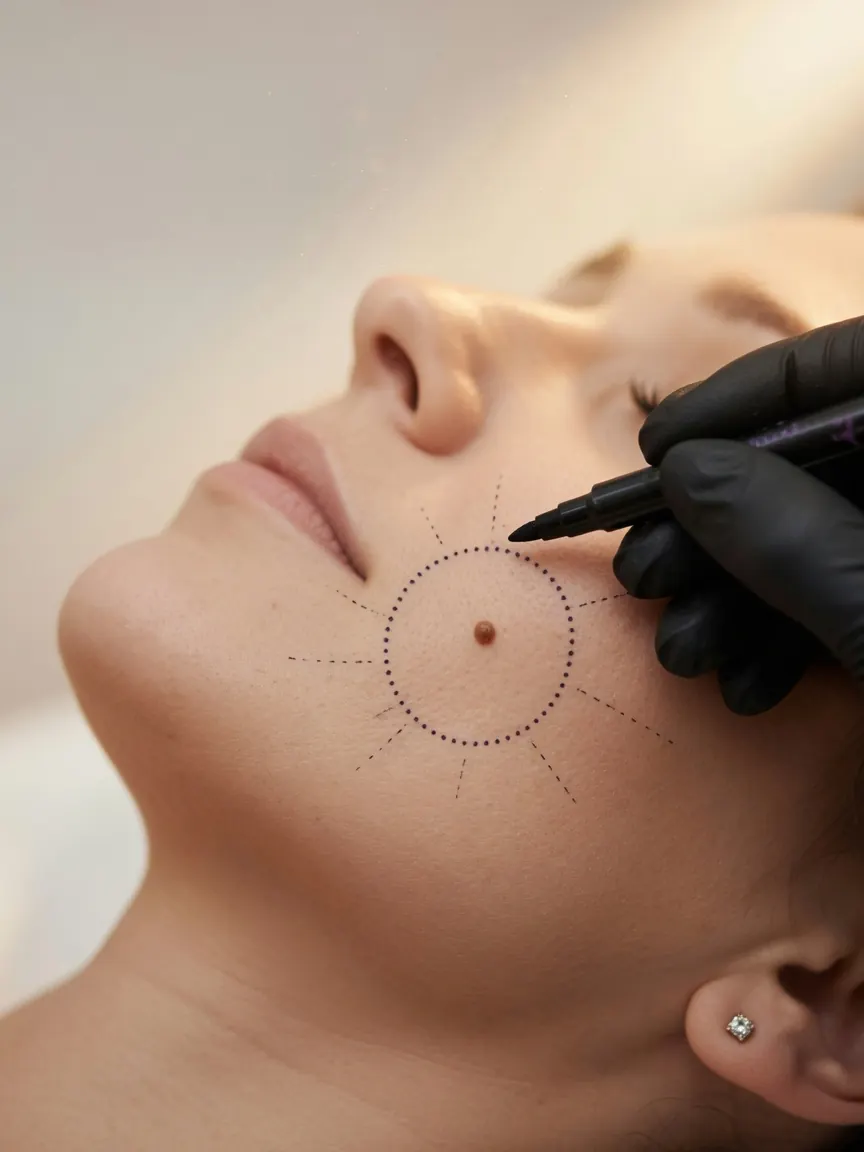
It is the controlled removal of benign skin lesions on the face. It is done under local anesthesia and, depending on the case, by excision with a scalpel or with laser. The choice depends on the size, depth, location, and appearance of the lesion.
It can help with situations such as these:
- Raised moles that catch on clothing, shaving, or makeup.
- Warts on the eyelids, cheeks, forehead, or around the mouth.
- Lesions that bother you cosmetically and that you want removed.
- Lesions that have changed and should be studied by pathology.
What it does not do is change the overall quality of your skin or treat extensive spots. Nor does it eliminate the risk of new lesions appearing over time, since they depend on genetics and sun exposure. If a mark remains after removal that you would like to improve, there are options such as scar removal, which are evaluated later on.
Who it is indicated for and who it is not
It is usually a good option if you have one or several benign lesions on your face that you want removed, you understand that a scar will remain (which is kept to a minimum), and you can follow the aftercare instructions.
In general, it may be indicated if:
- You have facial moles or warts that bother you.
- You are looking for an outpatient, short-duration procedure.
- You have realistic expectations about the scar.
It is advisable to wait or reconsider the procedure in situations such as:
- Active infection in the area or very inflamed skin.
- A history of keloid or hypertrophic scarring, which requires a more careful evaluation.
- Clotting disorders or use of certain medications, which should be reviewed with your doctor.
- Pregnancy or breastfeeding, where each case is evaluated individually.
If a lesion has irregular borders, multiple colors, grows quickly, bleeds, or changes, it should not be treated as a cosmetic matter: it requires medical evaluation and tissue study. In those cases, the removal has a diagnostic purpose, and the decision is made during the consultation.
What the surgery is like with Dr. Sandro Florez
Consultation
During the consultation, Dr. Sandro Florez examines each lesion, reviews your medical history, and explains which technique is most appropriate. He also talks with you about the expected scar and whether the tissue should be sent to pathology.
Surgery
The area is cleaned and local anesthesia is applied. If excision is chosen, the lesion is removed following, when possible, the natural lines of the skin so that the scar is less visible, and it is closed with fine sutures. If laser is chosen, the lesion is removed in layers, with control over the depth. It is an outpatient procedure and, in general, of short duration, although it varies according to the number and size of the lesions.
Afterward
A dressing is placed or wound care is indicated, and warning signs are explained. If a sample was taken, the pathology result is reviewed with you at a follow-up visit. Stitches, when used, are usually removed within the first week, depending on the area of the face.
Tests, preparation, and anesthesia
For small, benign lesions, extensive laboratory tests are often not required. Even so, the doctor decides based on your general health, your history, and the number of lesions to be treated.
Before the procedure, it is usually helpful to:
- Report allergies, illnesses, and medications, especially anticoagulants or anti-inflammatories.
- Avoid direct sun and tanning on the area during the weeks beforehand.
- Arrive with clean skin, without makeup or creams on the area.
- Mention whether you have had thick scars or keloids.
Anesthesia is usually local, with a small injection in the area. You may feel a brief burning sensation when it is applied and, afterward, pressure or a tugging sensation, but the area remains numb during the procedure. Larger or very numerous lesions may require a different plan, which is defined during the consultation. If you have questions about your case, you can schedule an appointment to review it in person.
Recovery and postoperative care
Recovery is usually straightforward and allows you to return to most daily activities in a short time, although each person's skin responds differently.
Usual care:
- Keep the wound clean and dry, according to the instructions you receive.
- Apply the prescribed ointments or dressings.
- Do not forcibly remove scabs, as this can leave a mark.
- Use sunscreen strictly once the skin allows it, since the sun can darken the scar.
- Avoid makeup on the wound until indicated.
Redness, slight swelling, or a thin scab during the first few days is normal. With laser, the area usually remains pink for a while. Consult if you notice increasing pain, discharge, fever, spreading redness, or persistent bleeding. The scar matures gradually over months, and the initial redness usually fades over time.
Results: what to expect and when
The lesion is removed during the procedure itself, but the scar takes time to settle. At first it may look pink or slightly raised, and over weeks and months it usually flattens and lightens. A final result is generally seen after several months.
It is important to keep in mind that:
- A mark always remains; the goal is for it to be discreet, not nonexistent.
- The quality of the scar depends on your skin type, the area of the face, the technique, and the aftercare.
- Some lesions, such as certain warts, may reappear.
- New moles or lesions can form over the years, and sun protection helps care for the skin.
If the scar is more visible than expected, there are complementary options, such as microneedling, which are evaluated once the wound has matured. If a sample was sent to pathology, the report confirms the nature of the lesion and guides whether any additional follow-up is needed.
Why have surgery with a physician surgeon in Bogotá
A lesion on the face deserves a diagnosis before a treatment. A physician surgeon can distinguish benign lesions from others that need study, choose the appropriate technique, and manage possible complications. In Bogotá, this also makes follow-up visits easier, which are an important part of the result.
With Dr. Sandro Florez you have:
- Medical evaluation of each lesion beforehand.
- Choice of technique based on your case, surgical or laser.
- Histopathological study when indicated.
- Follow-up of healing and guidance on aftercare.
If you have other skin lesions that are not moles or warts, such as lumps under the skin, it may be useful to learn about lipoma removal. If you live outside the city, see the information for patients from other regions at out of town. You can learn more about the team at about us.
How much mole and wart removal costs in Bogotá
The cost is not the same for every patient, so it is not possible to give a figure without knowing your case. It is defined after the consultation, once it is known what will be treated and how.
It usually depends on:
- The number of lesions removed.
- The size, depth, and location on the face.
- The technique chosen: surgical excision or laser.
- The need for histopathological study.
- Follow-up visits and the materials required.
During the consultation you receive a clear explanation of what the procedure includes, so that you can decide with full information and no obligation. If you want to know the cost for your situation, the best step is to schedule a consultation at the office in Bogotá.