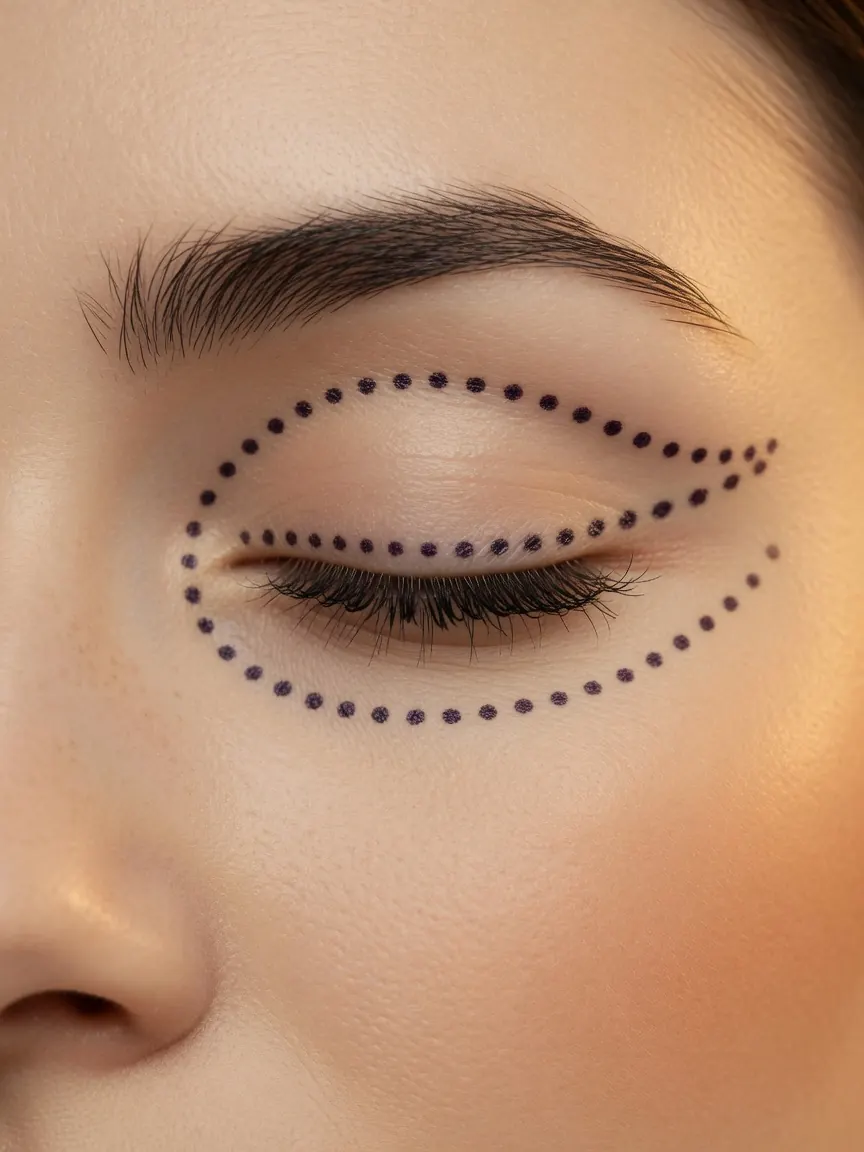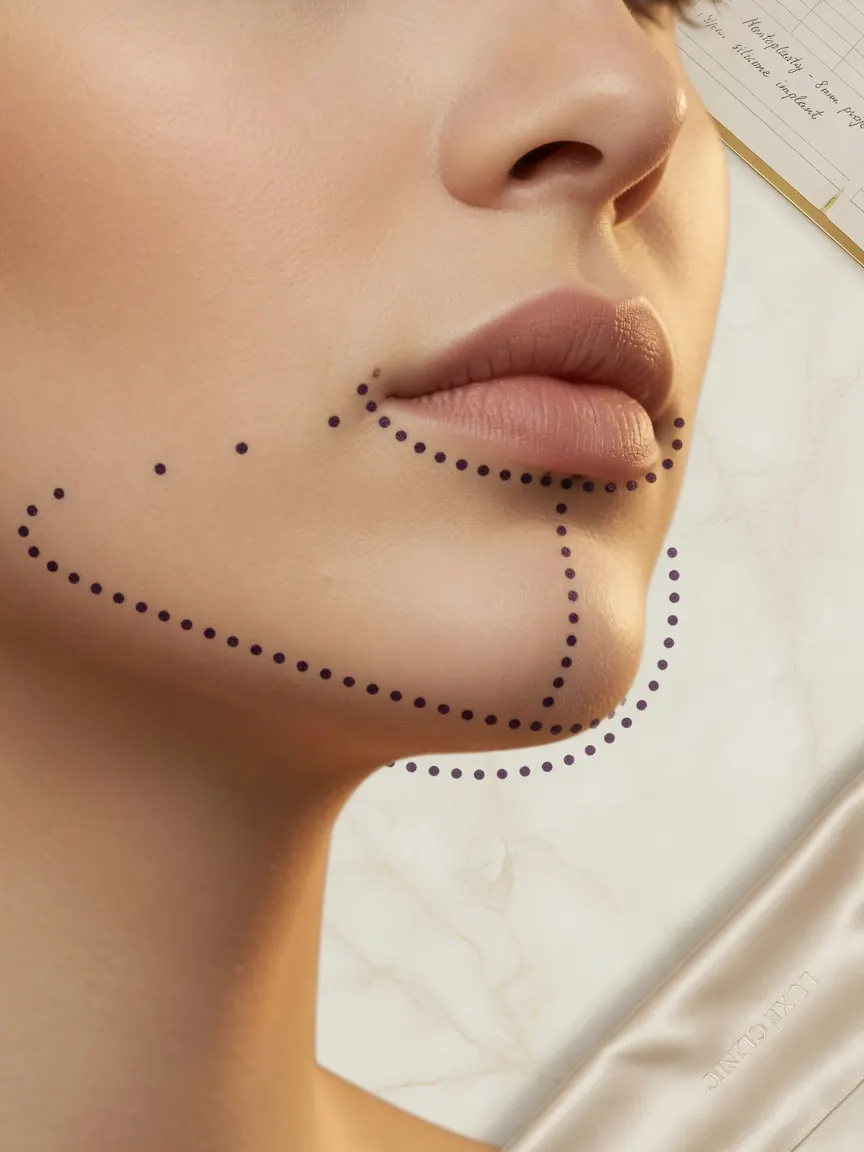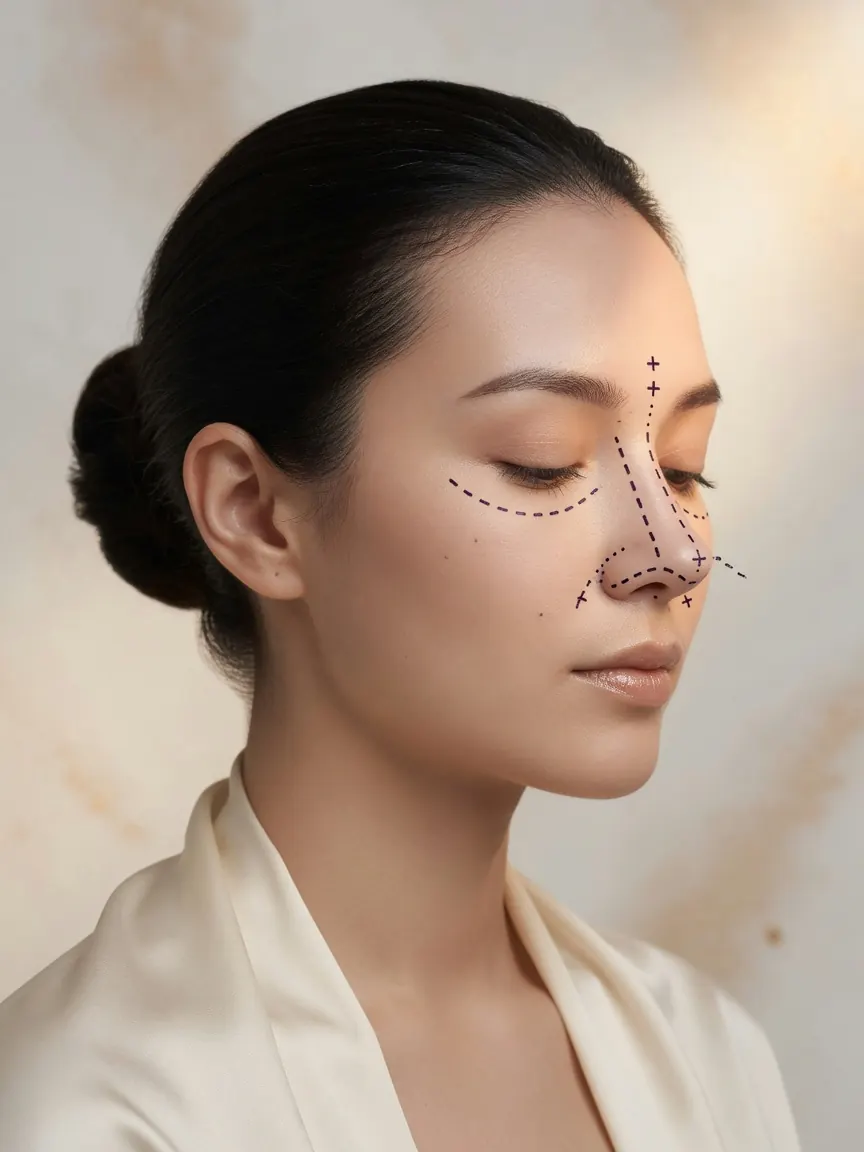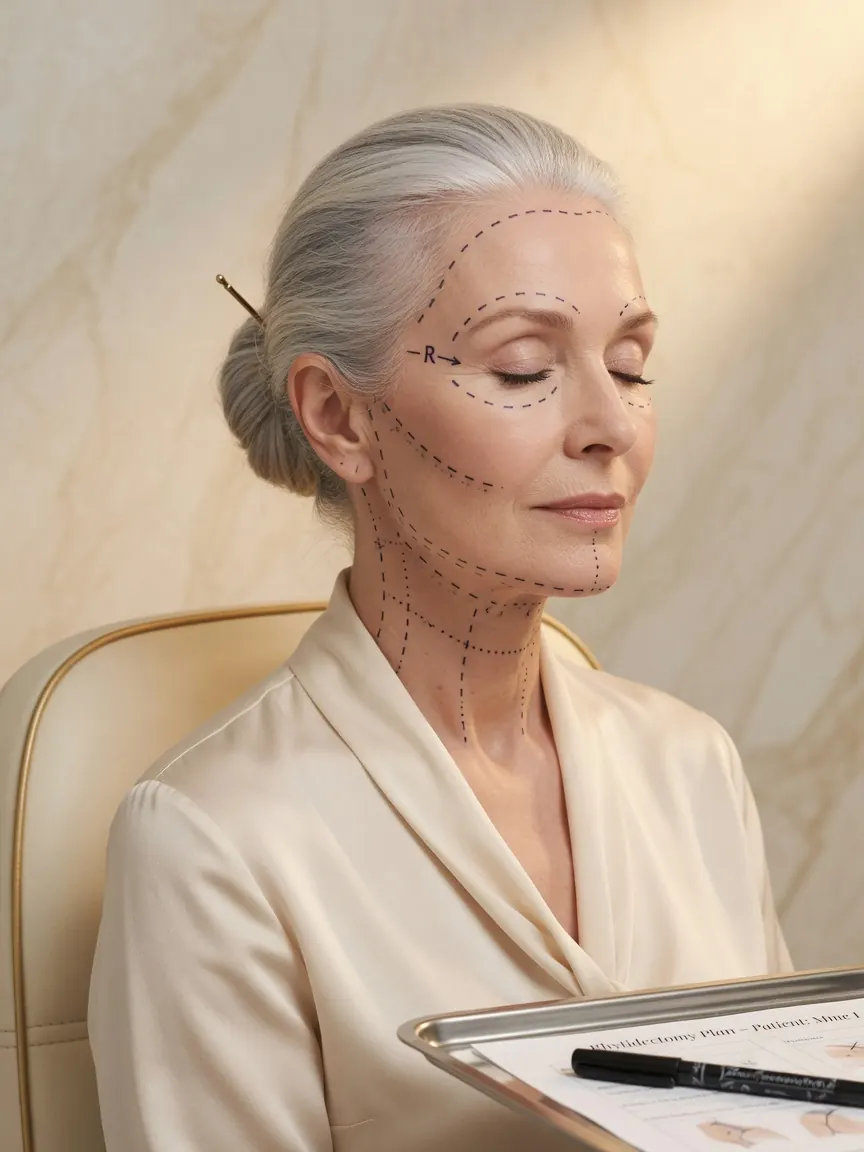
What a facelift is and what it corrects
A facelift, also called rhytidectomy, is a surgery that works on the deep layers of the face and not only on the skin. The surgeon repositions the supporting tissue, redistributes structures that have descended over time and removes excess skin, so that tension does not fall on the surface and the result looks natural.
It works mainly on the midface, the lower face and the neck. It can help improve:
- Sagging in the cheeks, jaw and neck.
- Deep folds, such as the nasolabial folds and marionette lines.
- Loss of definition of the jawline.
- Excess skin on the neck.
On its own it does not correct fine wrinkles, spots or skin quality, and it does not modify the eyelids or the forehead. For those areas there are other procedures, such as blepharoplasty, which are evaluated separately.
Who it is indicated for and who it is not
A facelift is usually indicated for people with moderate or marked sagging of the face and neck who no longer find enough change with non-surgical treatments. Age alone does not define the indication; the condition of the skin and tissues matters more.
- Visible sagging in the cheeks, jaw and neck.
- Deep folds and lines that do not improve with fillers.
- Loss of definition of the jawline.
- Good general health and realistic expectations.
It may not be recommended if you have uncontrolled medical conditions, clotting problems, you smoke and are not willing to quit, or you are looking for a radical change of identity. If your sagging is mild, options such as PDO threads or Ultraformer technology may be more suitable. That decision is made at the evaluation, not before.
What surgery with Dr. Sandro Florez is like
Evaluation
At the consultation, your medical history, your medications and your expectations are reviewed, and the skin, fat and position of the tissues are examined. Photographs are taken and the proposed technique, its limits and its risks are explained.
Surgery
It is performed in an accredited surgical center. The incisions are usually placed along the hairline and around the ear, so that the scars are as discreet as possible. The deep tissues are repositioned, excess skin is removed and the incisions are closed in layers. It generally lasts between three and five hours, depending on what is combined.
Afterward
When it is finished you go to recovery, where your progress is monitored. A soft dressing is usually placed and, depending on the case, you go home the same day or after one night of observation. Follow-up visits allow the stitches to be removed and healing to be reviewed.
Tests, preparation and anesthesia
Before surgery, lab tests are requested, such as a complete blood count and clotting tests, and, depending on your age and history, an electrocardiogram and a preanesthetic evaluation. These studies help confirm that you can have surgery with a reasonable level of risk.
- Stop smoking and vaping several weeks beforehand, as medically instructed.
- Report medications, supplements and blood thinners; some must be stopped.
- Avoid aspirin and anti-inflammatories during the indicated period.
- Arrange for a companion and a place to rest for the first few days.
- Wash your hair and face on the day of surgery.
Anesthesia is usually general, or deep sedation combined with local anesthesia, and is administered by an anesthesiologist. The choice depends on the extent of the surgery and your health. You will receive written instructions about fasting and what to bring on the day of the procedure.
Recovery and postoperative care
Recovery is gradual and varies from person to person. In the first few days, swelling, bruising and a feeling of tightness or numbness in the skin are common, and usually improve progressively. Pain is normally managed with the prescribed medications.
- First week: relative rest, head elevated, dressing changes and stitch checks.
- Around two weeks: many people resume light social activities, still with some residual swelling.
- Between four and six weeks: intense exercise and strenuous activity, only with medical clearance.
- Avoid direct sun and intense heat while there is swelling.
Contact us right away if you notice intense pain on one side only, swelling that grows quickly, fever or foul-smelling discharge. Complete swelling can take several months to go away.
Results: what to expect and when
Results appear progressively. Once the initial swelling subsides, between the first few weeks and two or three months, a more defined contour and a more rested face begin to be seen. The final settling of the tissues and scars can take between six months and a year.
A facelift does not stop aging: the passage of time, the sun, tobacco, weight changes and genetics continue to act. For that reason the effect usually lasts many years, within a broad range, and your face will keep changing, though from a more favorable starting point.
Mild asymmetries may occur, scars may be more or less visible depending on how you heal and, as in any surgery, there are risks such as hematoma, infection or injury to facial nerves, which are uncommon. All of this is explained in detail before you decide.
Why have surgery with a physician surgeon in Bogotá
A facelift requires detailed anatomical knowledge, especially because of the proximity of the facial nerves. Having it performed by a physician surgeon, in an accredited surgical setting and with an anesthesia team, is part of the safety of the process.
- A real medical evaluation of your history and risks.
- An honest indication, even if a non-surgical treatment is what is advisable.
- Close postoperative follow-up.
- Clear information about scope and risks.
Dr. Sandro Florez sees patients in his office and approaches each case in a personalized way; you can learn more about his practice on the about us page. Having surgery in the city where you live, or where you travel to without rushing, makes follow-up visits easier, and they are part of the treatment.
How much does a facelift cost in Bogotá
The cost of a facelift is not the same for everyone, and for that reason no fixed figure is published here. It depends on several factors that are only defined after examining you.
- Extent of the surgery: midface only, face and neck, or combined with other procedures.
- Technique chosen and surgical time.
- Type of anesthesia and fees of the anesthesiology team.
- Surgical center and length of stay.
- Follow-up visits, medications and postoperative supplies.
During the evaluation you receive a clear quote that details what is included. Comparing quotes only makes sense if they cover the same things: surgeon, anesthesia, clinic, medications and follow-up visits. It is also worth asking what happens if you need additional care. To learn about your case, you can schedule your evaluation.