What rhinoplasty is and what it corrects
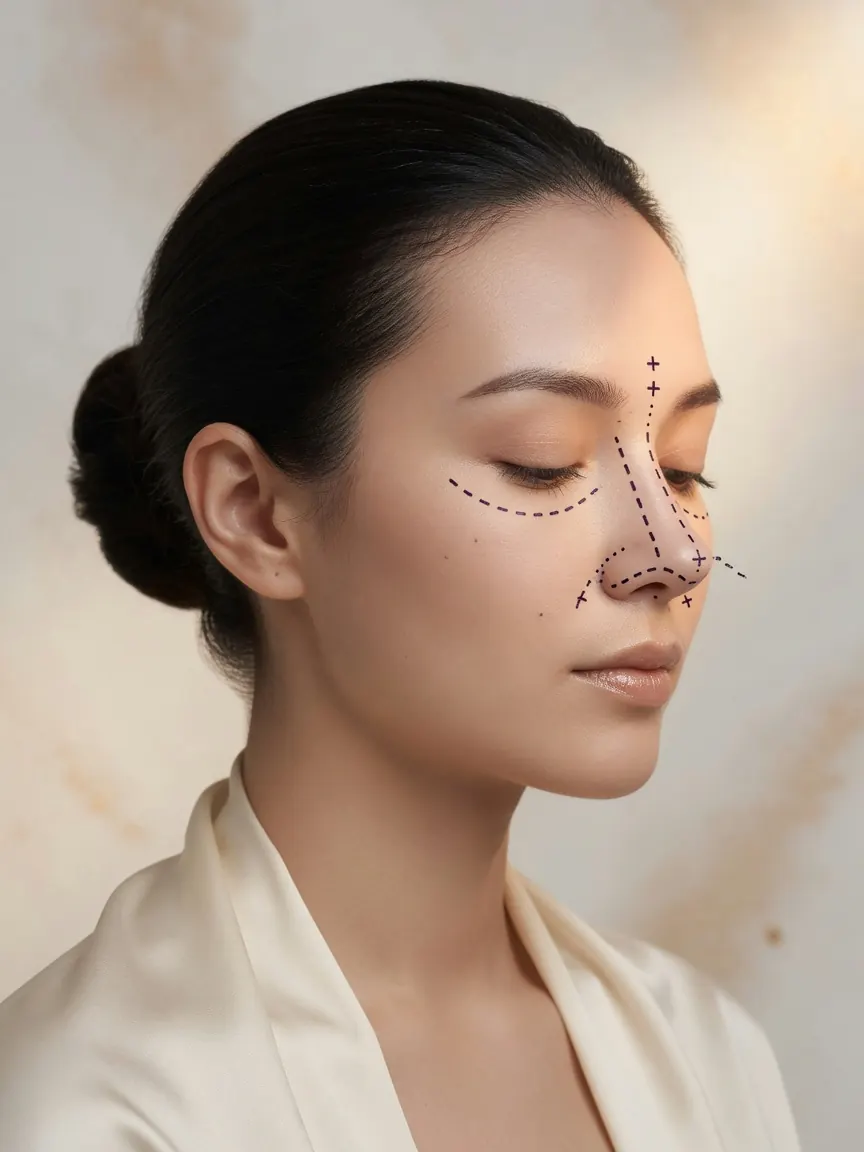
Rhinoplasty is a surgical procedure that modifies the nasal structure for aesthetic, functional, or both purposes. It works on the osteocartilaginous skeleton of the nose, which allows changing the profile, the projection of the tip, the width of the nostrils, and the relationship between the nose and the rest of the face.
Among the alterations it usually corrects are:
- Dorsum with a hump or visible irregularity in profile.
- Drooping, wide, or poorly defined tip.
- Wide or asymmetric nostrils.
- Septal deviation that makes breathing difficult.
- Sequelae of nasal trauma.
The procedure can be open, with a small external incision in the columella, or closed, with internal incisions. The choice depends on the anatomy and the changes being sought.
Who it is indicated for and who it is not
Rhinoplasty may be indicated in people with aesthetic or functional concerns related to the nose, as long as they have realistic expectations and an anatomy that allows the desired change. It is also considered in patients with breathing difficulty of structural origin.
Not everyone is a candidate at any given time. It is usually recommended to wait in the following cases:
- Adolescents who have not completed facial growth.
- People with uncontrolled chronic diseases.
- Patients with coagulation disorders without medical management.
- Unrealistic expectations about the result.
- Active tobacco use without willingness to stop.
The evaluation with Dr. Sandro Florez allows determining whether the procedure is appropriate for you or whether it is better to consider alternatives such as non-surgical nose reshaping.
How the surgery is performed with Dr. Sandro Florez
The process is divided into three moments: before, during, and after surgery. Each one has clear objectives and requires patient commitment.
Evaluation
In the initial consultation, the medical history is reviewed, the nose is examined externally and internally, and the changes you desire are discussed. Dr. Sandro Florez explains what is viable according to your anatomy and what limitations exist. It is also determined whether there is a functional component that should be corrected.
Surgery
The procedure is performed in the operating room, under general anesthesia or deep sedation depending on the case. The duration is usually between two and four hours, depending on the complexity. The nasal structures are reshaped and internal or external sutures are placed. In some cases, temporary splints or nasal packing are used.
After
After surgery, you remain under observation for several hours. Dr. Sandro Florez indicates the initial care, medications, and follow-up dates. Most patients continue recovery at home with periodic check-ups at the Bogotá office.
Tests, preparation, and anesthesia
Before scheduling the surgery, laboratory tests are requested and, in some cases, an evaluation by anesthesiology. This allows identifying conditions that may increase surgical risk and adjusting the plan.
Preparation usually includes:
- Stopping medications that affect coagulation, such as aspirin or anti-inflammatories, according to medical indication.
- Avoiding tobacco and alcohol consumption during the weeks prior.
- Not applying substances or nasal treatments without authorization.
- Fasting from the night before if general anesthesia will be used.
- Arranging accompaniment for the day of surgery and the first days of recovery.
Anesthesia can be general or deep sedation with local anesthesia. The choice depends on the type of rhinoplasty, the estimated duration, and the patient's health conditions. The anesthesiologist participates in this decision.
Recovery and postoperative period
Recovery from a rhinoplasty in Bogotá varies according to the extent of the surgery and each person's response. In general, the first days present swelling, bruising around the eyes, and nasal congestion. These signs usually decrease progressively.
During the postoperative period, it is recommended to:
- Sleep with the head elevated during the first weeks.
- Apply local cold intermittently in the first days.
- Avoid blowing the nose and sneezing with the mouth closed.
- Not wearing glasses resting on the nasal dorsum until the doctor authorizes it.
- Avoid intense exercise, direct sun exposure, and blows to the area.
Most people return to low-effort work activities after one or two weeks. Demanding physical activities usually wait between four and six weeks. Dr. Sandro Florez defines the timing according to each patient's progress.
Results: what to expect and when
The result of a rhinoplasty is not appreciated immediately. Swelling hides part of the change during the first weeks. The nasal shape gradually defines itself over several months.
In general terms:
- Most of the visible swelling decreases in the first four to six weeks.
- The profile and tip refine between the third and sixth month.
- The final result is usually considered stable after twelve months, although small changes may continue.
It is important to understand that the operated nose retains characteristics of your own anatomy. The goal is to improve facial harmony and, when applicable, respiratory function. If you are looking for minor changes without surgery, you can review non-surgical nose reshaping as an alternative in selected cases.
Why have surgery with a medical surgeon in Bogotá
Rhinoplasty is a surgery that combines aesthetic judgment and deep anatomical knowledge. A trained medical surgeon can evaluate not only the external appearance, but also respiratory function and the internal structure of the nose. This reduces the likelihood of disproportionate results or compromising breathing.
Having surgery in Bogotá with Dr. Sandro Florez allows you to:
- Have a complete medical evaluation before deciding.
- Perform the procedure in a certified surgical environment.
- Have close and accessible postoperative check-ups.
- Receive clear instructions for each stage of recovery.
- Evaluate complementary procedures such as mentoplasty or blepharoplasty if the goal includes other areas of the face.
Geographic proximity facilitates follow-up, a key aspect in any facial surgery.
How much a rhinoplasty costs in Bogotá
The cost of a rhinoplasty in Bogotá is not a fixed figure. It depends on several factors that are evaluated during the assessment:
- Complexity of the aesthetic and functional changes.
- Need to correct the septum or airways.
- Type of anesthesia and estimated duration of the procedure.
- Fees of the surgical team and the anesthesiologist.
- Costs of the operating room, supplies, and postoperative check-ups.
That is why prices are not given by phone or message. Dr. Sandro Florez explains the surgical plan and associated costs after examining you at the Bogotá office. If you want to know more details, schedule your evaluation or review the plastic surgery section.