What otoplasty is and what it corrects
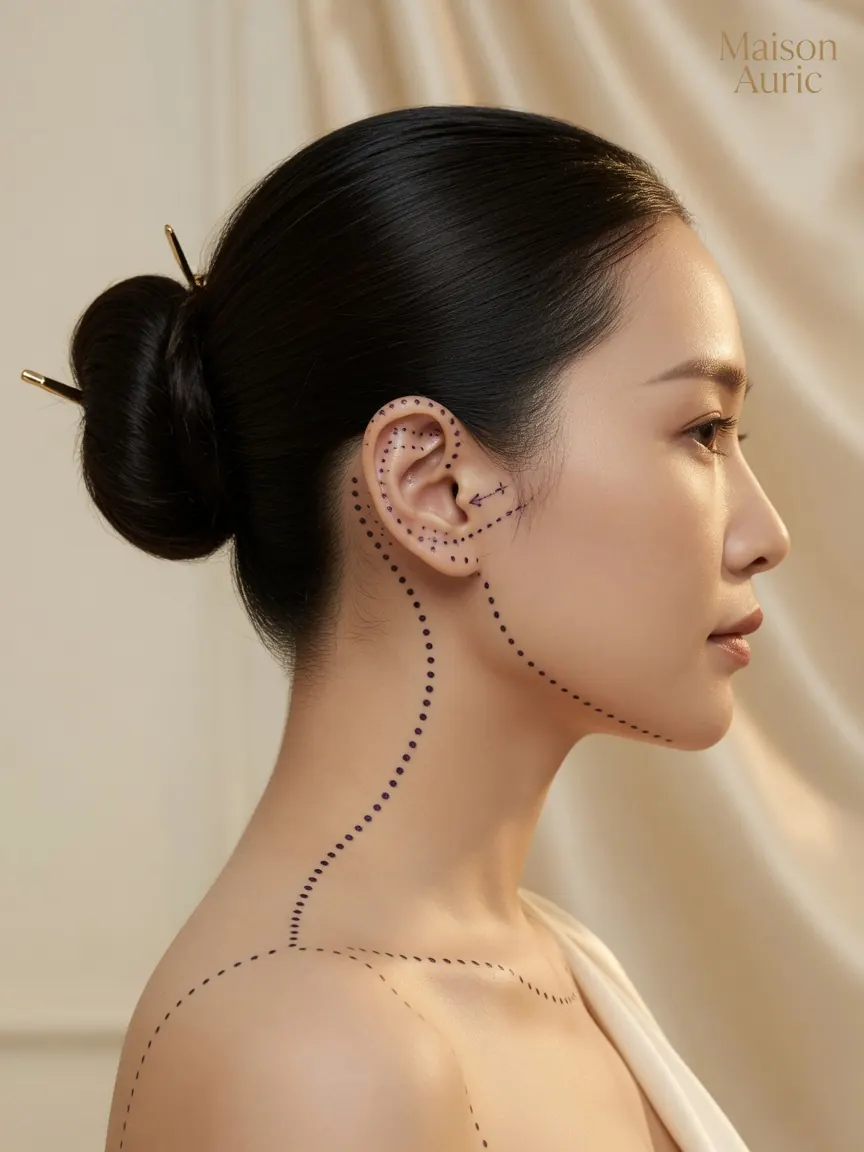
Otoplasty is a surgery that reshapes the cartilage of the ear to modify its shape, size or position relative to the head. It does not change hearing or seek to alter your face; its goal is for the ears to be in more harmonious proportion with your features.
This technique can address several situations:
- Prominent ears, due to a lack of fold or a very deep concha.
- Ear asymmetry, when one ear projects more than the other.
- Ears that are enlarged in relation to the face.
- Mild shape deformities, congenital or resulting from prior history.
Incisions are usually placed behind the ear, in the groove that joins it to the head, so the scar is generally barely visible. The specific technique, whether with sutures, cartilage reshaping or a combination, depends on what the surgeon finds during your consultation. It is worth knowing that exact symmetry does not exist: ears, like faces, always have small natural differences.
Who it is for and who it is not for
Otoplasty is usually considered when your ears cause you lasting aesthetic discomfort and your expectations are realistic. In general, it is a reasonable option if:
- Your ears clearly project outward.
- You notice a marked difference between one ear and the other.
- Your health allows surgery under anesthesia.
- You understand that the goal is to improve proportion, not to achieve perfection.
In children and adolescents, the ear reaches much of its adult size at an early age, but each case is evaluated individually, with the involvement of the family and attention to the patient's maturity.
It may not be suitable, or it may be best to postpone it, if you have an active infection in the area, conditions that impair healing or are not under control, or if you are seeking a change that surgery cannot deliver. It is also postponed in case of pregnancy. Smoking can affect healing, so you will be asked to stop. The final indication is always determined at the consultation, after examining your ears and reviewing your history.
What surgery is like with Dr. Sandro Florez
Consultation
At the first visit, Dr. Sandro Florez examines the shape of your ears, their projection and the quality of the cartilage, reviews your history and talks with you about what you expect. The technical options, possible risks and what can reasonably be expected are explained. If you decide to proceed, you can schedule your consultation and receive a written plan.
Surgery
The procedure usually lasts between one and three hours, depending on the technique and whether both ears are operated on. An incision is made in the posterior groove, the cartilage is reshaped or reinforced with sutures, and it is closed with discreet stitches. The surgery is usually performed on an outpatient basis, meaning you go home the same day when the team considers it safe.
Afterward
When finished, a bandage is placed that protects the ears and maintains their new position. You will receive clear instructions on medication, care and warning signs, and follow-up visits are scheduled to review how healing is progressing.
Tests, preparation and anesthesia
Before surgery, your health status is reviewed. Depending on your age and history, laboratory tests and, at times, other evaluations are usually requested, which the medical team determines individually. It is important that you report allergies, medications, supplements and previous surgeries.
Preparation usually includes:
- Stopping, under medical direction, medications that increase bleeding, such as aspirin and some anti-inflammatories.
- Quitting smoking in advance, because tobacco hinders healing.
- Arriving with clean hair and no products on the ears.
- Arranging for someone to accompany you home and during the first days.
As for anesthesia, in adults otoplasty can be performed under local anesthesia with sedation, or under general anesthesia, depending on complexity, your preference and medical recommendation. In minors, general anesthesia is usually preferred. Before the surgery, you will be told which option is proposed and why, and your questions about fasting and the instructions for the day of surgery will be answered.
Recovery and post-operative period
Recovery varies from person to person, but in general it follows a recognizable sequence. The first days are the most uncomfortable: it is common to feel tightness, tenderness or pain that can be managed with the prescribed medication, along with swelling and some bruising around the ears.
- First days: relative rest, head elevated when sleeping, and a bandage that must not get wet or be removed on your own.
- First to second week: the bandage is usually replaced with an elastic band and stitches are removed if applicable.
- Several weeks: the band is recommended mainly during sleep, to protect the ears from bumps and pulling.
Many people return to work or school gradually within one to two weeks, although it depends on your activity. You should avoid contact sports and strenuous exertion for several weeks, as directed by your doctor. Contact us immediately if you notice pain that increases markedly, uneven and growing swelling, discharge, fever or color changes in the ear, because they may require review.
Results: what to expect and when
Once the initial bandage is removed, the new position of the ears is already visible, although at that point there is still swelling that can disguise or alter the appearance. The final shape settles progressively over several weeks and even some months, as the swelling goes down and the scar matures.
It is important to have realistic expectations:
- The result seeks naturalness and proportion, not absolute symmetry.
- The scar behind the ear is usually discreet, but its appearance depends on each person's skin.
- As with any surgery, there are risks, such as infection, hematoma, changes in sensation or altered scarring.
- In a minority of cases the ears may tend to regain some of their projection and require an adjustment.
In general, results are considered long-lasting, because the cartilage is permanently reshaped, although natural aging continues its course. Before-and-after photographs and follow-up visits help you evaluate progress objectively.
Why have surgery with a physician and surgeon in Bogotá
Otoplasty seems like a minor surgery, but it requires anatomical and aesthetic judgment. Working precisely on cartilage, skin and sutures influences both the natural look of the result and the safety of the process. That is why it is helpful to be operated on by a physician and surgeon with training and experience in the field, in a suitable setting and with clear follow-up.
When choosing, you can consider:
- That the consultation is personalized and explains risks and limits candidly.
- That the procedure is performed in licensed facilities, with anesthesia equipment.
- That there is post-operative follow-up and a way to get in touch if you have questions.
- That you are not promised exact results or pressured to decide.
If you are considering other facial procedures, such as rhinoplasty or mentoplasty, it is perfectly fine to raise it at the consultation to calmly assess what makes sense in your case and in what order.
How much does otoplasty cost in Bogotá
The cost of otoplasty is not a single figure, because it depends on several factors that are determined after examining you. For that reason we do not publish prices on this page: we prefer to give you a clear, personalized quote at the consultation.
Among the aspects that influence it are:
- The complexity of the case and the technique required, depending on the shape of your ears and whether one or both are treated.
- The type of anesthesia and the involvement of the anesthesiologist.
- The place where the surgery is performed and the surgical time.
- Prior tests, follow-up visits, and dressing and compression materials.
At the consultation, you are told what the quote includes and what may generate additional costs, so that you can compare transparently. Be wary of very low offers that do not detail who operates, where and with what follow-up. An informed decision matters more than a price difference.