What Botulinum Toxin Is and How It Works
Botulinum toxin is a neuromodulator: it acts on the communication between nerve and muscle and temporarily relaxes the muscles responsible for dynamic wrinkles, meaning the ones that appear when you make expressions.
That is why its natural territory is the expression lines of the upper third of the face: forehead, frown lines and crow's feet. As muscle tension decreases, the skin no longer folds with the same intensity and the lines look softer.
The idea is not to erase movement but to modulate it, for a natural result that preserves expressiveness. Beyond its aesthetic use on expression lines, the neuromodulator is also used to manage facial asymmetries and to treat bruxism, always under medical indication.
Who It Is Indicated For and Who It Is Not
Botulinum toxin is usually considered in patients who come in for:
- Expression lines that show when they make facial movements.
- Forehead and frown lines.
- Management of facial asymmetries.
- Treatment of bruxism.
- Wrinkle prevention, when repeated movement is starting to mark the skin.
It is not the answer for every case. Wrinkles that remain visible at rest, volume loss or lack of firmness respond to other tools within facial aesthetic medicine, and sometimes the sensible move is to combine treatments or start elsewhere. There are also health conditions, medical histories or stages of life in which application should be postponed: the physician reviews all of this during the consultation before deciding.
What the Procedure Is Like at Dr. Sandro Florez's Practice
Consultation
Everything begins with a medical assessment: medical history, analysis of your anatomy and facial movement pattern, and definition of the areas to be treated. That is where the plan comes from, including the points and the dose each face needs.
Application
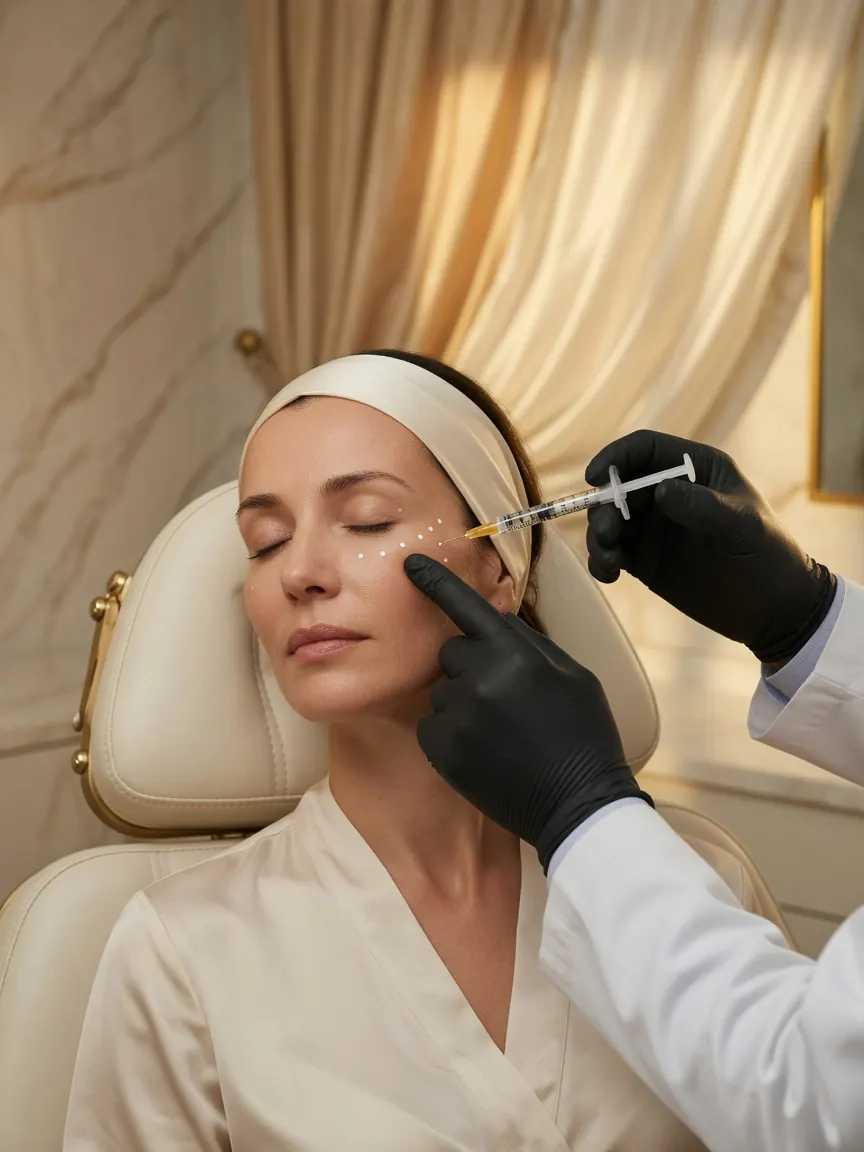
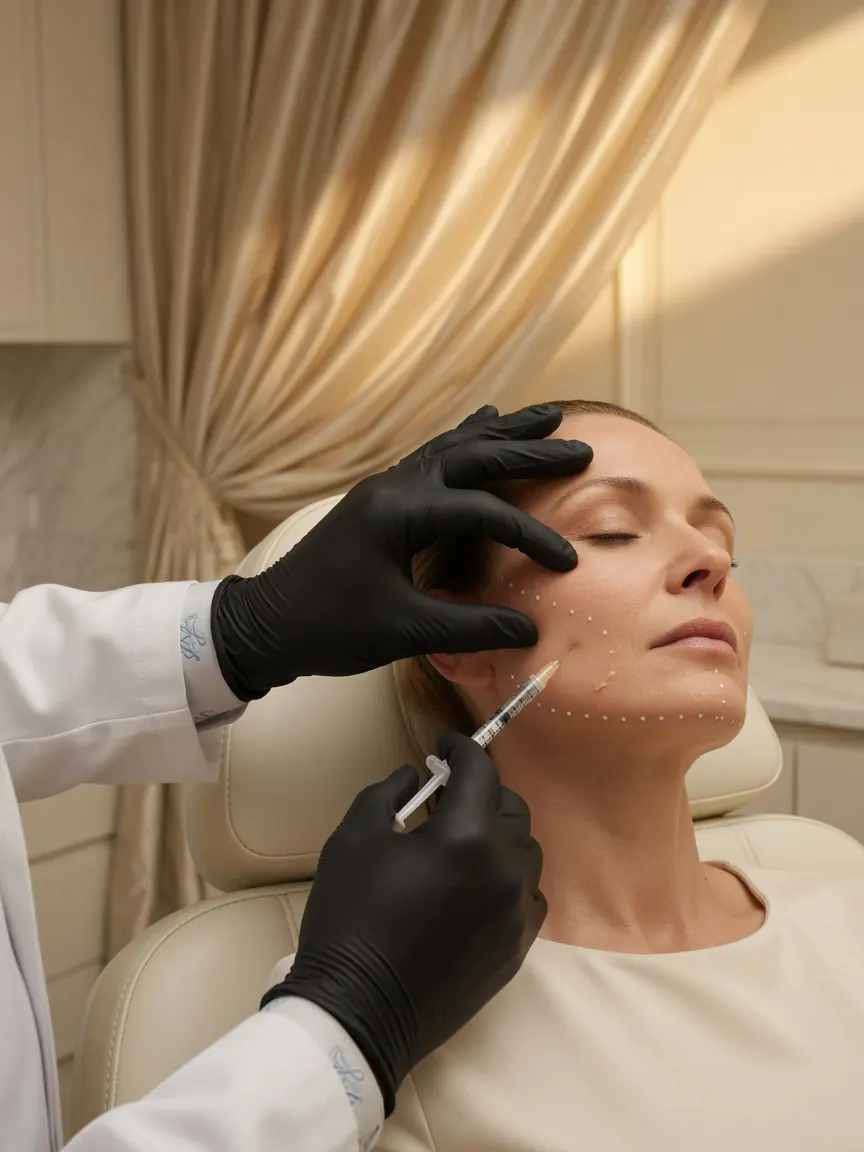
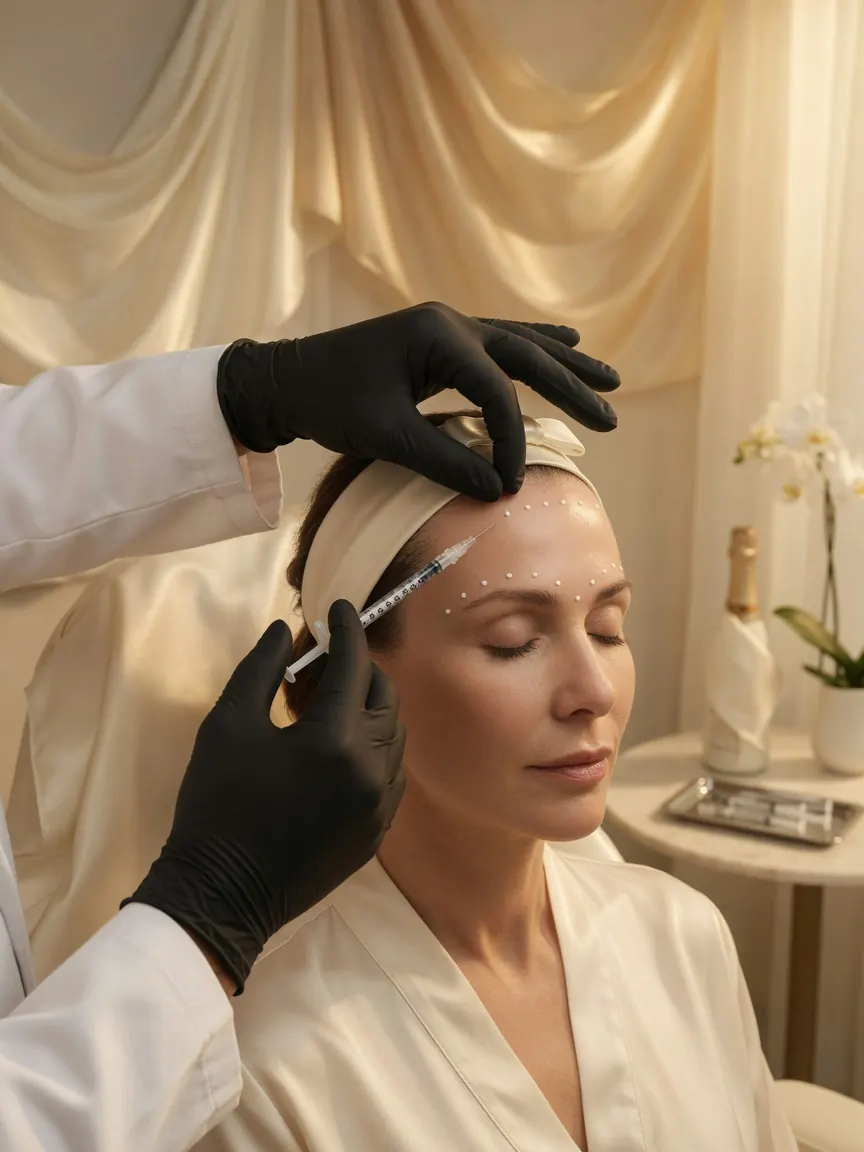
It is an in-office procedure, performed with micro-injections at the previously defined points, following the anatomy of the muscles meant to be relaxed. How long it takes depends on the number of areas treated, and the physician tells you beforehand.
Afterwards
No downtime is required: most patients return to their routine the same day, following the instructions given during the consultation. A follow-up visit is scheduled to assess the result.
Results: What to Expect and When
The effect of botulinum toxin is not immediate: it settles in gradually over the days after the application, so the result is assessed at the follow-up visit rather than as you leave the office.
In well-selected patients, expression lines tend to look softer and the face more rested, without losing expressiveness. What can be achieved depends on skin quality, how deep the lines are and each person's muscle strength, so an identical result cannot be promised from one patient to another.
The effect lasts on average between four and six months, depending on each patient's metabolism and the area treated. With periodic applications, the result tends to hold for longer.
Aftercare and Recovery
Recovery is usually straightforward. Mild redness or swelling may appear at the injection points during the first 24 to 72 hours, which is expected and temporary.
To support the process, the physician provides personalized instructions. In general terms:
- Follow exactly the instructions you receive during the consultation.
- Avoid rubbing or massaging the treated areas.
- Resume intense physical activity and skin treatments when your physician clears you.
- Attend the follow-up visit to review the result and adjust the plan going forward.
If you notice anything that worries you, the right step is to contact the practice rather than wait until your next appointment.
Why Have Botox Done by a Physician in Bogotá
Botulinum toxin is a medical act. The result does not depend only on the product, but on the judgment of whoever applies it: which muscles to relax, which ones to leave alone, and how to do it while protecting the balance of the face. That is the difference between a natural result and a face without expression.
At his practice in Bogotá, Dr. Sandro Florez —a physician and surgeon dedicated to aesthetic and hair medicine— performs the assessment, the application and the follow-up. Working with a physician also means a medical history, management of any complications and a plan that is adjusted over time. You can read more about his approach to facial anatomy and botulinum toxin in this blog article.
Combining It with Other Treatments
Botulinum toxin works on muscle and movement. Other facial needs —volume, skin quality, firmness— are addressed with different tools, and the consultation is where it is decided whether to combine them or space them out in stages.
- Facial aesthetic medicine treatments for texture, glow and hydration.
- Anti-aging medicine protocols with a more comprehensive view.
- Non-surgical firmness options, such as Ultraformer MPT.
If you are between 25 and 35 and your interest is mainly preventive, it is worth reading about prejuvenation before deciding. The order and the combination are defined by the physician in each case, not by a standard package.